BEST GAMES

Little Misfortune
Fran Bow 4
Little Misfortune 2

Among the Sleep
SIMILAR GAMES

Little Misfortune Full Game

Night in the Woods

Little Nightmares 2025

Sally Face



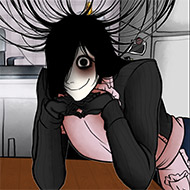
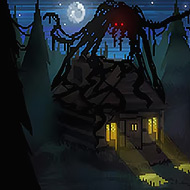
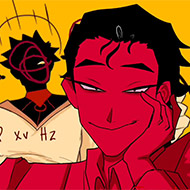
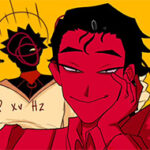
What happens when Unum stops behaving the way his route says he should? The answer, in To Eat a God, is that you already made a mistake several screens earlier and did not notice. This is a visual novel built around a central act of concealment: you play a living puppet placed inside the Garden of Gods, and your only protection is convincing Unum, Septem, and Nulla that you belong there. The gods are not passive audience members. They are aware. They watch the tempo of your choices, sense hesitation in your dialogue, and at least one of them can reach further than the screen.
The core mechanic is identity maintenance. E42 — the puppet — must suppress every human instinct when responding to the gods. Choices that feel natural from a player’s perspective will often read as Out of Character to Unum, Septem, or Nulla, triggering suspicion. The game tracks attributes including obedience, provocation, sanity, and divine erosion across every dialogue branch, and the checks are not announced. You will not see a stat screen telling you that provocation spiked. You will see Septem pause slightly differently, and if you know what you are looking for, that pause means something.
The OOC detection system — what the community simply calls “breaking character” — is the primary failure mode across all routes. Players who treat this as a standard visual novel and click through choices based on personal preference consistently reach endings that feel like punishment without understanding why. The puppet’s logic is not your logic. A kind, reassuring answer that would defuse tension between two humans may read to Unum as the puppet asserting autonomy it should not have. Learning to think as the puppet rather than as yourself is the actual skill this game is teaching.
Memory Fragments — described in-world as discarded code and developer logs — are collectible across routes and provide the clearest picture of the Garden’s real history. Players who complete a single route without collecting fragments will understand the surface of the story. Players who gather them across multiple routes and piece together what the Garden actually is discover a second layer of narrative that retroactively changes the meaning of choices made in the first playthrough. This is what the community calls the archaeology loop: treating repeat runs as digs rather than replays.
Unum’s possessiveness defines his route. He monitors the puppet’s attention closely and responds badly to any choice that suggests the puppet has interests outside of him. Early in the game, on Unum’s route, the window for what counts as acceptable behavior feels wide. By the time deeper scenes arrive, that window has narrowed significantly, and players who did not track what Unum was registering across early sessions find themselves locked out of the better endings without understanding when the drift started. The correct read is that Unum is always taking notes.
Septem’s obsession with order makes his route the most demanding for players who want to maintain a consistent mask. Septem notices inconsistency across the session — an answer that conflicts with a choice made twenty screens earlier will register. Players with careful route notes and a habit of writing down their prior decisions before returning to a session tend to do significantly better on Septem’s route than players who trust memory alone. Horror and puzzle players who enjoy precision tend to gravitate toward him; players who prefer emotional engagement without rigid structure often find Septem’s route punishing.
Nulla’s route is locked at the start and requires a specific dialogue unlock, which the game does not spell out clearly. The unlock involves a choice in a scene that most first-run players resolve through instinct rather than calculation. Nulla himself operates as the Void Lord — nihilistic, suffocating in his dependency, and aware of the game structure in a way the other gods only hint at. One of the most-discussed moments in To Eat a God community spaces involves Nulla’s ability to delete save files. This is not a narrative event described in a cutscene. It is something that happens to your actual save data under specific conditions, and the first time it occurs without warning is genuinely disorienting in a way that screenshot descriptions cannot fully capture.
To Eat a God treats the fourth wall as structural rather than decorative. Nulla and the other gods do not simply acknowledge the player in winking, self-aware dialogue. They behave in ways that suggest awareness of save states, reloading frequency, and route hunting. A player who saves before every choice and reloads often will notice that this behavior eventually becomes visible within the story — not through explicit accusation but through shifts in how the gods phrase things. The game monitors your habits and feeds them back through character behavior.
The Sacrifice system runs underneath this. Sacrificing a Memory — a childhood joy or deep emotion — permanently alters your attribute spread and locks or unlocks certain story branches. Unlike a standard stat check, this system removes the sacrificed element from the puppet’s available responses in later scenes. Players who sacrifice carelessly in early routes find routes accessed on repeat plays feeling incomplete in specific, mechanical ways. Sacrifice is permanent within a playthrough and should be treated as such.
Character portraits distort in To Eat a God as emotional states shift, and the style change — from fine hand-drawn manga into something more fragmented and Cthulhu-adjacent — is not a special cutscene effect. It can happen mid-conversation during a dialogue exchange, triggered by a choice that spiked the wrong attribute. First-time players often assume the visual distortion is scripted. By the second or third route it becomes clear that the distortion is reactive, tied to what is happening in the scene rather than a fixed animation trigger.
To Eat a God currently has more than 15 endings spread across 4 routes and more than 80,000 words of text. The current build supports multiple hours of reading on a single route, and the replay value is structural rather than cosmetic — different routes do not show alternate versions of the same events. They show events the other routes did not have access to, and understanding how those events connect requires having completed at least two full routes with attention to Memory Fragments. The community term for the best completion state — reaching the actual “eating” of a god rather than one of the failure endings — is sometimes called the god-eating run, and it requires specific attribute thresholds built across a carefully managed playthrough.
The honest criticism most players raise is pacing in the middle sections of Unum and Septem’s routes. After the initial tension of establishing the puppet identity, there are stretches where the dialogue exchanges slow considerably without adding new mechanical stakes. Players who prefer sustained pressure sometimes find these sections test their patience, particularly on second runs where the novelty of the setting has faded. Whether this is a structural flaw or intentional decompression before the route’s escalation is genuinely debated, and the discussion tends to split between players who read the pacing as deliberate and those who read it as uneven.
Nulla’s route becomes accessible after unlocking a specific dialogue that the game does not announce directly. The unlock involves making a particular choice during a scene in one of the other routes — most commonly Septem’s — that registers a specific attribute threshold before the branch point appears. Players who are not specifically tracking attribute values when they first pass through this scene typically miss the unlock and need a second playthrough to trigger it. Nulla’s route does not appear in the main selection menu until the dialogue condition is satisfied.
Nulla, as the Void Lord, can interact with your save data as a mechanical action within specific conditions on his route. This is not a scripted story moment shown in a cutscene — it is a real deletion of the save file, tied to choices that trigger Nulla’s awareness of the player behind the puppet. The conditions that trigger this are related to specific behaviors during his route. Players who back up their save files before entering deep into Nulla’s route and who manage their attribute spread carefully tend to avoid the deletion, but the specific trigger conditions are deliberately not spelled out in-game.
Each Memory Fragment sacrifice permanently alters the puppet’s attribute profile within the current playthrough and removes the sacrificed memory from available dialogue responses in later scenes. Sacrificing a fragment related to obedience, for example, changes how the puppet can respond to Unum’s control behaviors and can close off endings that require obedience to be intact. The Sacrifice system is best understood as a permanent branch-locker rather than a simple stat boost — what you give up is what you lose access to, not just numerically but narratively. Tracking which fragments you have sacrificed and what routes they affect is the core of advanced play in To Eat a God.
To Eat a God does its best work on the second run, when the memory of what Unum said early in his route becomes suspicious rather than charming, and when the Sacrifice choices made the first time through show their long shape. The god-eating ending is not a reward for persistence — it requires understanding the Garden’s actual logic, which only accumulates across routes. Single-run players see one version of the puppet’s story. The full picture requires following all three gods through to their conclusions and reading what the Memory Fragments say about why the Garden exists at all.