BEST GAMES

Little Misfortune
Fran Bow 4
Little Misfortune 2

Among the Sleep
SIMILAR GAMES
Little Misfortune Full Game
Night in the Woods
Little Nightmares 2025

Sally Face

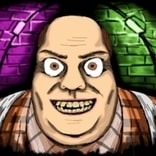
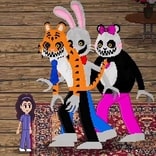
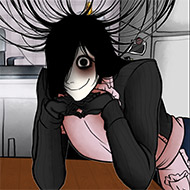
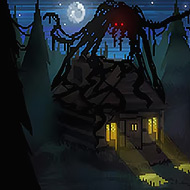

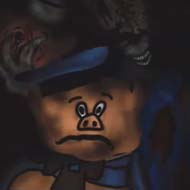
The Three Little Pigs (Analog Horror) does not resemble the story you think you remember. What begins as a familiar nursery tale — three pigs, three houses, a wolf at the door — gradually strips away the warmth of that memory and replaces it with something fractured and deeply unsettling. Presented through the visual language of degraded VHS footage, the game uses scanlines, tracking errors, and corrupted audio not as decoration but as storytelling tools, turning every technical glitch into a signal that something beneath the surface is badly wrong. This is a horror game built almost entirely on atmosphere and implication, and it is more effective for it.
| Genre | Analog Horror / Psychological Horror |
| Style | VHS aesthetic, slow-burn dread |
| Structure | Three chapters, one per pig |
| Core mechanic | Exploration, VHS tape examination, environmental puzzles |
| Tone | Atmospheric, no jump scares |
What separates The Three Little Pigs (Analog Horror) from other horror games using retro visual styles is that the analog presentation is not just a skin — it is the primary interface between the player and the story. You examine old videotapes, rewind footage, and trigger playback in sequence. The glitches and visual disturbances that interrupt footage are not random: they consistently appear at moments of narrative significance, pointing you toward hidden content or marking transitions in the story’s tone. Learning to read the static as a signal rather than treating it as noise is one of the first real skills the game requires.
The three chapters follow each pig’s perspective separately, and each environment is designed around a distinct register of horror. The straw house chapter is defined by ambient noise that never quite resolves into identifiable sounds — a creak that could be structural, a tone that might be wind. The stick house introduces flickering lights and spatial loops, corridors that seem to return you to rooms you have already left, quietly undermining your confidence in the map you have been building in your head. The brick house, the ostensibly safe location in the original fable, becomes a fortress of silence and growing paranoia. The quiet is worse than the noise.
The wolf in The Three Little Pigs (Analog Horror) is never seen directly in the way a standard horror antagonist would be. It is a presence at the edges — a shape in the static, a voice fragment in corrupted audio, a recurring symbol in the background of footage you almost missed. Players who approach the game expecting a pursuer to dodge or outrun will find something more disorienting instead: a threat that operates through implication and builds dread by refusing to resolve into anything concrete.
The gameplay structure in each chapter alternates between direct exploration and what the community calls static events — moments where the game takes control of the visual output and presents a distorted sequence that must be observed carefully before play resumes. These events are the primary way the narrative delivers its darker revelations, and missing details within them means arriving at later sections without the context that makes them land. Watching a static event a second time after progressing further often reveals connections that were not readable the first time through.
Puzzle solutions in The Three Little Pigs (Analog Horror) are rarely explicit. The game presents you with corrupted media files, background symbols, and fragmented narration, and asks you to assemble meaning from them rather than follow a clear instruction. Players with patience for environmental storytelling and a willingness to revisit earlier sections with new information will extract far more from the game than those who try to move forward as quickly as possible. This design choice is one of the aspects the community debates most — some players find the layered ambiguity rewarding, while others find it obscures the narrative to the point of frustration.
The narration is one of the game’s most discussed elements. Early in the game, the narrator sounds familiar — the cadence of a children’s story, measured and warm. Over the course of the three chapters, that voice changes in ways that are difficult to describe but immediately felt when you notice them. Lines repeat with different inflections. Pauses stretch. By the time you reach the brick house chapter, the narration has become something you pay acute attention to rather than something that functions as background explanation.
The most consistently reported missed element in The Three Little Pigs (Analog Horror) is the background content during static events. The game’s visual distortion makes it easy to focus on the center of the screen, but recurring symbols appear in the margins of the footage — in corners, in reflections, in the grain of walls behind the main action. Players who return to completed chapters specifically to watch the periphery of these sequences find details that reframe what the story is actually about. The community has catalogued many of these through careful screen-by-screen analysis.
The degraded audio is similarly layered. At normal listening volume, certain sequences appear to contain only ambient noise or silence. Players who listen with headphones and pay attention to stereo positioning report hearing fragments — voice clips, tonal patterns — that are inaudible at speaker volume. Whether these fragments are narrative content or intentional misdirection is something the community has not fully resolved, which is arguably the intended state.
The game also contains what players describe as branching path moments — points where your response to a prompt or your choice of which tape segment to examine first appears to affect the content of subsequent sequences. These branches are subtle enough that most players are not certain they are making choices with meaningful consequences until they compare playthroughs with others. The confirmed existence of variations in playthrough content is one of the main reasons players return for multiple runs.
Horror players who need explicit threat mechanics to sustain engagement should know that The Three Little Pigs (Analog Horror) offers almost none of that. There are no timed sequences, no health systems, and no direct confrontations that can result in a failure state in the conventional sense. The game’s horror operates entirely through pacing, visual design, and sound. This is what analog horror as a format does well, and what players unfamiliar with the genre sometimes find disorienting — the absence of something to react to can itself be the unsettling element the game is deploying.
For players who are already fans of the analog horror space, the VHS format here carries specific genre signals: the corrupted footage implying the recording was made under circumstances that damaged it, the narration fracturing in ways that suggest the person speaking is no longer quite the person who started talking, the familiar story becoming unrecognizable as the chapters progress. These are things analog horror enthusiasts recognize as intentional devices, and the game uses them with a level of control that feels considered rather than atmospheric by default.
First-time players in the horror community often cite the moment when the narration first repeats a line from much earlier in the game, slightly altered, as the moment The Three Little Pigs (Analog Horror) stops feeling like a stylized retelling and starts feeling like something else entirely. That shift is quiet and deliberate, and it works precisely because the game has spent the preceding time establishing the narrator as a stable presence.
The honest point of contention around The Three Little Pigs (Analog Horror) is the degree to which its narrative ambiguity constitutes depth versus incompleteness. The game deliberately withholds resolution, and players who feel the imagery and audio fragments add up to a coherent underlying story find it deeply satisfying on reflection. Players who expected a narrative they could follow in real time sometimes find the experience leaves them with more questions than the game seems interested in answering. Both responses are understandable given the game’s design priorities.
The static event sequences specifically generate discussion because they operate on a different rhythm from the exploration sections — they can run long, are not skippable, and demand attention without providing clear feedback about what you are supposed to be taking away from them. Sensitive players who found the original analog horror format in other media compelling will likely find these sequences effective. Players newer to the format may need to adjust their expectations about what the game considers a satisfying horror beat.
The game contains branching content that varies between playthroughs based on choices made during exploration and tape interaction, though the nature and extent of these variations are deliberately understated. The community has documented differences in sequence content and certain narrative details that appear or shift depending on which paths are taken. Whether these constitute distinct endings in a traditional sense or are better described as variations in tone and detail is part of what keeps players returning for additional runs, particularly through the brick house chapter where the divergences appear most pronounced.
The spatial loop in the stick house chapter — the section where corridors appear to circle back on themselves — is a designed narrative device rather than a puzzle with a hidden solution. The loop resolves when specific conditions in the environment are met: examining the correct objects in a particular order or triggering a specific audio fragment. Players who attempt to resolve it through pure navigation tend to extend it significantly. Paying attention to the flickering light patterns in the corridor ceiling provides directional information the map does not.
The narrator’s shifting cadence, repeated lines, and eventual tonal deterioration across the three chapters are central to the game’s story rather than a technical quirk. The narration functions as a character in its own right, one whose reliability and stability degrade in parallel with the wolf’s increasing presence at the edges of the footage. By the brick house chapter, the repetition of earlier lines with altered inflection is the most direct statement the game makes about what is actually happening. Listening to the narration in the straw and stick house chapters again after completing the brick house section reveals patterns that were present from the beginning.
The Three Little Pigs (Analog Horror) rewards the kind of player who finds dread more unsettling than shock and who is willing to sit with ambiguity rather than demand resolution. The VHS presentation, the three-chapter structure, and the use of the wolf as a presence rather than a character combine into something that uses the original fable’s bones without any of its warmth. By the time the brick house chapter’s particular silence sets in, what you are playing has almost nothing in common with a children’s story — which is exactly the point.