BEST GAMES

Little Misfortune
Fran Bow 4
Little Misfortune 2

Among the Sleep
SIMILAR GAMES

Little Misfortune Full Game

Night in the Woods

Little Nightmares 2025

Sally Face



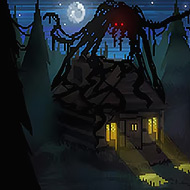

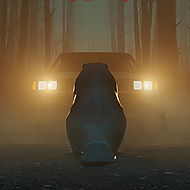
Don’t Mess With Bober drops you into a countryside cabin where the first thing you see is a note pinned near the door — a warning from the previous tenant not to disturb the local wildlife. You ignore it. Within the first fifteen minutes of the game, you knock a wheelie bin into the river, destroy Bober’s dam, and watch the beaver clock you with what can only be described as a murderous stare before vanishing into the treeline. That stare is the exact moment Don’t Mess With Bober announces what kind of game it actually is: a first-person horror experience wrapped around a premise so absurd it circles back to being genuinely unsettling.
| Genre | First-person horror / walking simulator |
| Platforms | PC, PS4, PS5, Nintendo Switch |
| Playtime | 45–90 minutes |
| Perspective | First-person |
| Collectibles | 10 toy beavers |
The game splits cleanly into two distinct experiences. The first half is almost meditative: you arrive at Matthew’s borrowed cabin, you do a little tidying, you fish by the river with a satisfying button-press timing mini-game, you take calls from your friend who owns the property. The pacing here is deliberately slow. Players who expect the horror to start immediately will feel lulled into a false sense of ease — and that’s exactly the point. You’re being set up. The countryside feels spacious but is quietly funneling you toward the dam, toward the bin, toward the moment everything changes.
Once Bober decides Matthew has gone too far, the second half activates and the game transforms into a survival horror chase across three distinct zones: the surrounding forest, a cave network underground, and a sawmill. The forest section, where Bober begins felling trees in your path, is where most players first discover that the falling trees cause instant death on contact. There’s no health bar, no stumbling — Matthew drops immediately. Experienced horror game players who expect to absorb a hit and recover will die repeatedly here before learning to sprint and steer at the same time in near-darkness.
The cave network that follows divides community opinion more sharply than anything else in the game. It’s maze-like in a way that feels unintentional rather than designed, and the absence of clear landmarks makes navigation genuinely disorienting. Some players describe spending longer lost in the caves than in any other section combined. Whether that friction reads as atmosphere or tedium depends entirely on your patience with directionless wandering. The sawmill section that comes after it, however, is where Don’t Mess With Bober finds its footing again — Bober’s glowing red eyes tracking through the dark while you hunt for tools and flip trip switches is the game at its most focused and most tense.
The stealth sections in Don’t Mess With Bober work on paper better than they do in practice. The idea is that Bober patrols an area and you must crouch, move slowly, and duck into lockers or behind cover to avoid detection. When it clicks — usually in the sawmill — it produces real tension. The locker system, where you physically pull yourself into a narrow cabinet and wait while heavy footsteps approach and recede, is the closest the game comes to delivering the B-movie claustrophobia it’s aiming for.
The problem is consistency. Bober’s detection logic behaves unpredictably enough that players who are clearly using stealth correctly will still trigger a chase, while others who blunder through a section in a panic will somehow pass undetected. The community vocabulary that emerged around this is telling: players talk about “Bober logic” the way veterans of early survival horror games talk about tank controls — as an accepted limitation to work around rather than a mechanic to master. If you get caught, it’s an instant game over, and the checkpoint reloads with Matthew’s voice line (“Damn, I’d better run!”) playing again immediately — a detail that starts funny and becomes maddening by the fourth reload.
Players who approach the stealth sections as pure trial-and-error will get through faster than those attempting to read patterns into Bober’s behavior. There aren’t reliable patterns. Move slowly, use the lockers whenever they’re available, and accept that a certain number of failures are essentially random. Horror game veterans who expect consistent rules will find this the most divisive aspect of Don’t Mess With Bober.
Scattered across the levels are ten toy beavers — small figurines tucked into hard-to-reach corners, behind furniture, and in places you wouldn’t normally check during a linear horror run. Finding them requires actively leaving the critical path, which feels counterintuitive when Bober is actively hunting you, but most of them are located in the calmer first half of the game where exploration is still safe. The toy beavers don’t affect the ending, don’t unlock additional content, and aren’t required for completion — they exist purely as a collectible layer for players who want to slow down and look.
Completionists who go back specifically to find all ten discover something interesting about Don’t Mess With Bober in the process: the cabin and river area are far more detailed than a single linear playthrough reveals. Handwritten notes, photographs pinned near the phone, and environmental details around the dam site add texture to the story that’s easy to miss at normal pace. The game rewards this kind of attention even if it never requires it.
Don’t Mess With Bober uses AI voice acting, and the game is upfront about this. Matthew’s narration is flat, his reactions to genuinely alarming events are tonally wrong in ways that range from distracting to accidentally hilarious, and the cabin owner’s phone calls have a stilted quality that reminds you constantly you’re hearing synthesized speech. This is, depending on who you ask, either the worst thing about the game or an essential part of its charm.
The B-movie framing does a lot of work here. The game positions itself as being in the tradition of 1980s low-budget horror — films where poor audio mixing and wooden delivery were features of the genre rather than failures of it. In that context, the AI voices read less like a budget limitation and more like a deliberate aesthetic choice. Whether or not that was the original intention, the community mostly lands on treating it as part of the joke. The telephone call that plays after Matthew destroys the dam — utterly unfazed, zero remorse, immediately off to bed — is funnier with the deadpan delivery than it would be with naturalistic acting.
New players who come in expecting polished voice work will be genuinely put off. Players who arrive having seen gameplay footage and understood the tone will find the AI voices add to the experience rather than subtract from it. It’s worth knowing before you start.
Despite its rough edges, Don’t Mess With Bober gets several things right that bigger, better-funded horror games frequently miss. The premise — being stalked by a legitimately furious beaver because you knocked his dam into a river — is so specific and so committed to itself that it generates a particular kind of dread that conventional monster-chases can’t replicate. Bober is funny and Bober is threatening at the same time, and holding both those qualities simultaneously is genuinely difficult to pull off. The final confrontation, which resolves in the manner of a classic 80s horror conclusion, pays off the setup in a way that feels earned.
The game’s pacing during the forest chase — with exploding cakes rolling down the river as a declaration of war and trees crashing down in your path — is genuinely inventive. These are not mechanics borrowed from anywhere. The mountain chase sequence, specifically, is the kind of moment players mention immediately when describing Don’t Mess With Bober to someone who hasn’t played it: visibility near zero, trees falling from all directions, Matthew’s footsteps on the dark slope. It lasts about two minutes and it’s the best two minutes the game has.
The falling trees in the forest section kill on contact with no warning — keep moving and don’t stop to look behind you.
The cave network has no map. If you’re playing on console, the cursor-based interaction with workbench objects is notably slower than on PC, and several players found the fiddly interface more frustrating than the horror sections themselves. The game was built first for PC and it shows in those moments.
Most players finish in 45 to 90 minutes depending on how much time is spent lost in the cave section and how many attempts the stealth sections require. The game itself is designed to run closer to an hour. If you’re attempting to collect all ten toy beavers in a single run, budget an extra 10–15 minutes for searching the cabin area and river path before the dam is destroyed — most figurines are accessible only during the calm first half.
Running is usually the wrong choice once Bober has spotted you. The instant game over on detection means your only viable response to a failed stealth attempt is the checkpoint reload. In the sawmill, running to a locker after being spotted occasionally works if one is close enough, but consistently trying to sprint away from Bober in open areas results in being caught almost every time. The game’s stealth sections are designed around avoidance and hiding, not evasion once detected.
The game concludes in the style of an 80s horror film, with Matthew using the sabotaged shotgun in a final confrontation at the sawmill. The sequence resolves the story in a way the game’s premise sets up from the beginning, though what actually happens is best experienced without spoilers. Players who found the cave section and the stealth mechanics frustrating generally agree that the final confrontation is worth getting to — it’s the one moment where Don’t Mess With Bober fully commits to its genre homage without apology.
Don’t Mess With Bober is a short, messy, surprisingly effective horror game built around one of the most specific premises in recent memory. The cave section will test your patience, Bober’s detection logic will infuriate you at least once, and Matthew’s AI delivery will make you laugh at moments the game intends to be serious. None of that undermines what Don’t Mess With Bober actually is: a focused, low-budget horror experience that earns its mountain chase, its glowing red eyes in the sawmill dark, and its 80s-style ending completely on its own absurd terms.