BEST GAMES

Little Misfortune
Fran Bow 4
Little Misfortune 2

Among the Sleep
SIMILAR GAMES

Little Misfortune Full Game
Night in the Woods

Little Nightmares 2025

Sally Face


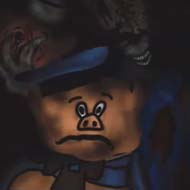

Bearsus looks like a comedy brawler dressed up in fur and slapstick, but the moment you step into your first Arcade Mode bout you realize it plays like a tight, stripped-down fighting game that punishes impatience and rewards players who actually watch their opponent. Two buttons. Eight bears. Arenas where ring-out pressure is constant and every misread can end your round in seconds. The absurd premise conceals a system that genuine fighting game fans will recognize immediately.
| Genre | Fighting / Brawler |
| Modes | Arcade, Versus (2-Player), Endless |
| Roster | 8 playable bears |
| Controls | Two-button scheme |
| Platform | Browser |
The entire combat vocabulary of Bearsus is built on just two inputs, which sounds like a restriction until you start reading what those inputs can produce in combination with jump timing and positioning. A quick tap sends your bear hopping or sidestepping, while a held or doubled input triggers an attack or a grapple depending on where you are relative to your opponent. The system draws a clear line from DiveKick’s design philosophy — reduce inputs to the minimum and let spacing, timing, and reads carry the depth. Once that clicks, you stop thinking about buttons and start thinking about distance.
Every one of the eight playable bears carries a different set of moves that emerge from the same two-button base, meaning the muscle memory you build on one fighter does not fully translate to another. The polar bear plays differently from the grizzly; the smaller bears have faster recovery windows, which matters enormously when the arena is compact and a single missed attack can leave you wide open for a counter-throw. Casual players tend to button-mash through the early Arcade opponents and think the game is over, then hit a wall around the third or fourth fighter when that approach stops working entirely.
One detail that players in the community notice after a few sessions: the double-jump arc is not symmetric. The peak height and horizontal drift differ slightly depending on whether you jump from standing or off a wall bounce, and learning to exploit that asymmetry is what separates fighters who control space from fighters who just react to it. Most beginners never figure out that the wall bounce changes your hitbox timing, not just your position.
In Arcade Mode you face five bear opponents in sequence, and each of those fights is a best-of-three round. Your health resets between opponents, which is important to understand early because it changes how aggressively you should fight. There is no reason to play conservatively to save health when the slate wipes clean between bouts. The game uses this to encourage offensive play against weaker opponents while still training you for the later fighters who will punish recklessness immediately.
By the time you reach the fourth and fifth opponents in Arcade Mode, the AI begins using the same counter-timing windows that experienced players exploit against each other in Versus Mode. It starts reading your jump timing with noticeable accuracy, and fighters who leaned too heavily on one attack pattern early in the ladder will find that pattern completely shut down. This is the game’s steepest difficulty jump, and it is the point where most first-time players restart to try a different bear from the roster.
Completing Arcade Mode unlocks new fighters and color pawlettes — the community term for the fur and detail customization options the game assigns to each bear. Veteran players often replay Arcade Mode purely to unlock specific pawlettes for bears they have already mastered, which adds a secondary progression layer even for players who have no interest in the Versus or Endless modes.
Endless Mode is where Bearsus stops being approachable and starts being genuinely demanding. Unlike Arcade Mode, your health bar carries over from one fight to the next — no resets, no mid-run recovery. Every point of damage you absorb is damage you carry into the next opponent, and the opponents keep coming until you lose. The strategic question shifts entirely: you are no longer trying to win each fight as cleanly as possible for its own sake. You are budgeting health across an entire run.
Players who do well in Endless Mode develop what the community calls a “damage-first mindset” — prioritizing getting the opponent’s health to zero quickly over executing the cleanest or flashiest combo, because fast wins preserve more of your own bar. This means favoring safe, consistent attacks over high-damage sequences that require multiple setup steps and expose you to counter-hits during the animation. The two-button system actually supports this style well because the fastest options are also often the safest, once you have the timing down.
Experienced players note that Endless Mode is also where the roster differences feel most meaningful. Faster bears with shorter combo strings tend to accumulate less damage per run because their recovery windows minimize retaliation windows. Heavier bears hit harder per exchange but absorb more punishment building to that damage, making runs shorter on average. Whether that trade-off suits your playstyle is something you only discover after several failed runs with each character.
Bearsus fully supports local two-player bouts with both fighters on the same keyboard, and Versus Mode is where the game’s community vocabulary expands the most. Players who have spent time in the mode talk about “read windows” — the brief frames after an opponent commits to a jump or attack where the correct response is already determined by positioning — and “pawlette baiting,” the informal term for choosing a bear color scheme specifically to create visual confusion in tight arena corners. Neither of these terms is in any tutorial. Both emerge from actual play.
The honest divisive point about Versus Mode: the single-keyboard setup creates physical crowding between two players at any standard keyboard, and the key assignments are close enough that misclicks happen. Players who are serious about the mode tend to remap inputs, which the game supports. If you are not aware that remapping is an option, you might assume the cramped default layout is just something you endure, and that assumption leads players to dismiss the two-player experience before giving it a real test.
Speed runners and competitive players who enjoy minimalist fighting games — those who found DiveKick more interesting than most conventional fighters — are the community segment that has pushed Versus Mode the furthest. They have mapped out frame-advantage windows for each bear’s core attacks and identified which pawlettes have color contrast issues in specific arenas. That depth exists in a game most people play for five minutes and move on from, which is either a testament to the design or evidence that Bearsus never quite reached the audience that would have appreciated it most.
The most common mistake in early Bearsus sessions is treating both buttons as interchangeable panic options. New players hammer inputs when an opponent closes distance rather than timing a specific response, which results in accidental jumps, mis-aimed attacks, and frequent ring-out deaths from self-inflicted wall collisions. The game never explicitly teaches you that patience is a weapon, but it becomes obvious by the second Arcade fight when mashing costs you the first round.
The second common error is ignoring the arena edges. Every arena in Bearsus has boundaries that can eliminate a fighter instantly on contact if their momentum carries them out, and many new players spend so much attention on the opponent that they walk themselves into elimination. Awareness of your own position relative to the edge is a skill Bearsus teaches only by punishing its absence.
A third beginner error — less obvious than the others — is staying loyal to the first bear selected out of familiarity rather than testing the roster early. Each of the eight fighters has a different speed-damage trade-off, and the character that clicks for a player is not always the one that looked appealing before the first match. Competitive players typically recommend testing at least three or four bears before committing to one for Arcade or Endless runs.
Players who have spent real time with Bearsus frequently point to one specific moment as the game opening up: the first time you successfully bait an opponent into a whiffed attack and land the counter before they recover. Until that happens, the game feels like a reaction test. After it happens, it feels like a read-based fighter where you are ahead of your opponent by two decisions rather than responding to theirs. That shift in frame is where the game’s actual depth becomes visible.
The community debate that surfaces most often around Bearsus is whether the two-button system is a genuine design achievement or a marketing hook that limits what the game could have been. Players from a traditional fighting game background tend to enjoy it as a clever experiment. Players who came expecting a deep fighter with full move lists often feel the ceiling is too low. Both sides have legitimate points, and the game does not obviously try to resolve that tension — it simply presents its system and lets the player decide.
Bearsus does not have a dedicated story mode. Arcade Mode acts as the closest equivalent, putting you through a sequence of five bear opponents with brief character moments before each bout. There is no narrative framework beyond the setup — bears fighting in arenas — and the game does not attempt to build one. For players looking for a plot, that is a limitation. For players who want pure fighting game structure, it is a clean choice.
Yes. All eight bears in Bearsus are accessible through Arcade Mode progression. Completing runs and achieving victories unlocks new fighters and pawlettes without requiring you to touch Versus Mode at all. Versus Mode is entirely optional for roster completion, though it is the only mode where the unlock system has no bearing — both players can choose any unlocked bear from either player’s progress.
Bear choice has a meaningful impact on Endless Mode runs. Faster, lighter bears in the Bearsus roster tend to produce longer runs because their quicker recovery windows reduce the damage absorbed during exchanges. Heavier bears trade that recovery advantage for higher per-hit damage, which can accelerate early fights but results in more health loss overall. Most community veterans recommend starting Endless Mode with one of the faster characters until the health-management fundamentals are solid.
Bearsus earns its staying power not from its theme but from the precision hidden under the two-button surface. The moment a session stops feeling like a button test and starts feeling like a read contest is the moment the game reveals what it actually is — a compact fighting system where every decision from bear selection to jump timing carries real weight. If you spend long enough in Arcade Mode to reach the fourth opponent on the ladder, you will understand exactly why the roster of eight and the pawlette unlock loop keep players coming back to something that looks, on the surface, like it should last fifteen minutes.